Mainland vs. Free Zone Company Setup in the UAE: Which is Right for You?
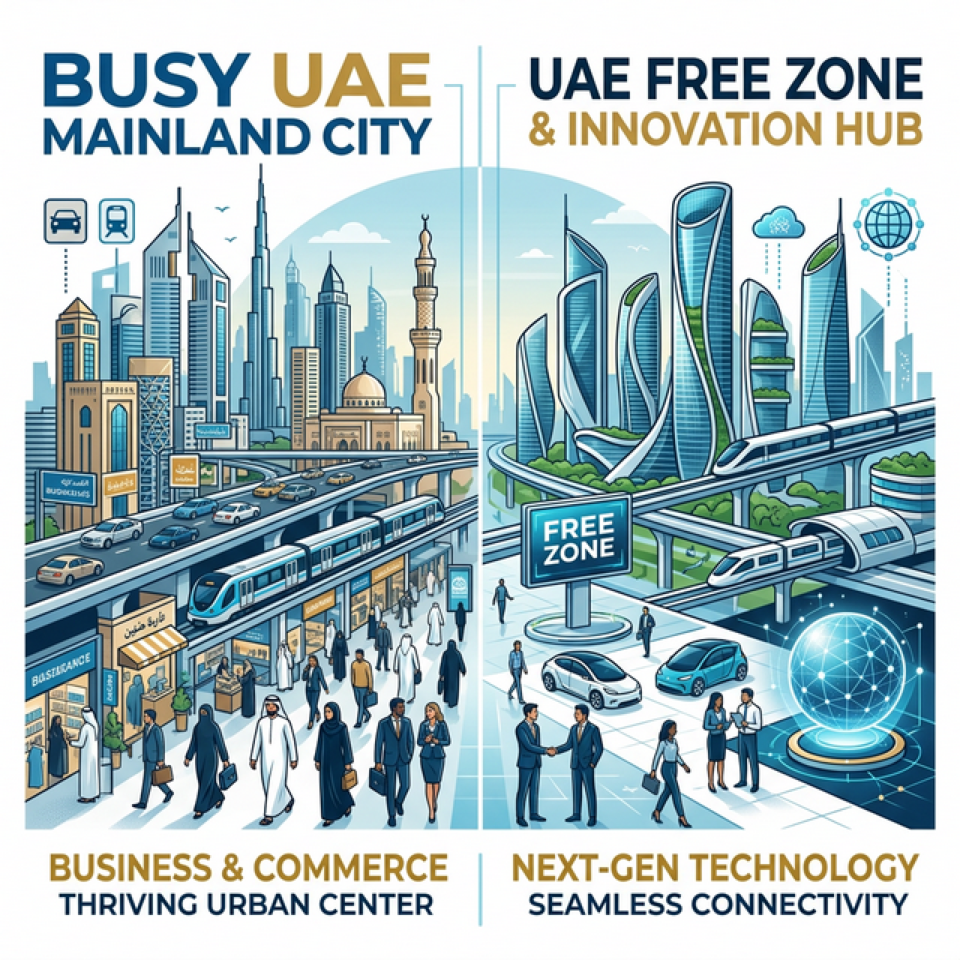
Starting a business in the United Arab Emirates (UAE) offers incredible opportunities, but one of the first and most critical decisions you will face is choosing your jurisdiction. The two most popular options are Mainland and Free Zone setups.
While both offer significant advantages, they cater to different business models, operational needs, and long-term goals. Making the wrong choice can lead to operational limitations or unnecessary costs. Let’s break down the key differences to help you decide which structure is right for you.
Quick answers
- Want to sell directly to UAE customers, retail, or government? Mainland.
- 100% export, online, or international services? Free zone is usually cheaper and faster.
- Foreign ownership: Both structures allow 100% foreign ownership for the vast majority of activities. Mainland 100% foreign ownership has been permitted since June 2021 under Federal Decree-Law 26 of 2020.
- Office space: Mainland needs physical premises. Free zones offer flexi-desks, co-working, and virtual options.
- Visas: Mainland visa quota scales with office area. Free zone quota is tied to the facility package.
- Corporate Tax: Both fall under 9% UAE Corporate Tax above AED 375,000. Free zone entities can access the 0% Qualifying Free Zone Person rate on qualifying income only.
1. Ownership Structure
Mainland: Historically, foreign investors setting up a Mainland company required a Local Sponsor (a UAE national) holding 51% of the shares. Since June 2021, under Federal Decree-Law No. 26 of 2020, 100% foreign ownership is permitted for the vast majority of mainland commercial and industrial activities. A small list of strategic-impact activities still requires Emirati participation. Free Zone: Free Zones have always offered 100% foreign ownership, making them highly attractive to international investors. You have complete control over your business without the need for a local partner.
2. Scope of Business Activities
Mainland: A Mainland company offers maximum flexibility. You can trade directly in the local UAE market and take on government contracts. If your goal is to open retail spaces, restaurants, or provide services directly to consumers across the Emirates, Mainland is the way to go. Free Zone: Free zone entities are generally restricted to doing business within their specific free zone or outside the UAE. To trade directly in the UAE local market, a free zone company typically needs a mainland distributor or agent, which adds an extra layer to operations. The full set of free zone benefits makes the trade-off worth it for the right business model.
3. Office Space Requirements
Mainland: The Department of Economic Development (DED) requires Mainland companies to lease a minimum amount of physical office space. Virtual offices are generally not permitted for Mainland setups. Free Zone: Free Zones offer absolute flexibility. Depending on your license and visa requirements, you can opt for a virtual office (Flexi-desk), co-working spaces, or physical offices. This makes Free Zones incredibly cost-effective for startups and service-based businesses.
4. Visas and Employees
Mainland: There is generally no cap on the number of employment visas you can obtain, provided you have sufficient office space to accommodate the staff. Free Zone: The number of visas allocated is directly tied to the type of facility you lease. A Flexi-desk might grant you 1-3 visas, whereas larger physical offices will grant more.
5. Auditing and Financial Compliance
Mainland: Mainland companies are closely regulated, and historically, many are required to undergo mandatory annual financial audits to renew their trade licenses. Free Zone: Auditing requirements vary dramatically depending on the specific Free Zone authority. Some strictly require audited financial statements annually (e.g., DMCC, DDA), while others do not. However, with the introduction of UAE Corporate Tax and the 0% rate on Qualifying Income for Free Zones, audited financial records are now effectively mandatory across the board.
Which One Should You Choose?
- Choose a Mainland Setup if: You plan to trade directly in the local UAE market, open retail branches, interact directly with the UAE public, or bid on government contracts.
- Choose a Free Zone Setup if: Your business is 100% export-oriented, service-based with international clients, or you are a startup looking for a cost-effective, 100% foreign-owned structure with minimal initial physical footprint. The right emirate matters too: see RAK vs Dubai vs Abu Dhabi and, for regulated financial services, DIFC vs ADGM.
If your business outgrows its sole establishment along the way, our guide on converting a sole establishment to an LLC walks through the practical steps.
Frequently Asked Questions
Can a foreigner own 100% of a UAE mainland company? Yes, for the vast majority of mainland commercial and industrial activities. 100% foreign ownership has been permitted since June 2021 under Federal Decree-Law No. 26 of 2020. A small list of strategic-impact activities still requires Emirati participation.
Can a free zone company sell directly to UAE mainland customers? Generally no. Free zone entities can serve clients inside their own free zone or outside the UAE. To sell into the mainland market, the free zone company typically needs a mainland distributor or agent.
Which is cheaper to set up, mainland or free zone? Free zones are usually cheaper at the entry level because of flexi-desk and bundled visa packages. Mainland requires physical office space, which raises the floor on cost.
Do free zone companies pay UAE Corporate Tax? Yes, with a meaningful exception. Free zone entities are subject to UAE Corporate Tax, but a Qualifying Free Zone Person can access the 0% rate on qualifying income. Non-qualifying income is taxed at 9%.
Which emirate should I pick? Depends on activity, target market, and budget. Our comparison of RAK vs Dubai vs Abu Dhabi walks through the trade-offs, and for regulated financial services see DIFC vs ADGM.
Can I convert from free zone to mainland later? Yes, but it is rarely a clean re-registration. It usually involves setting up a new mainland entity and migrating contracts, staff, and banking. Plan the structure properly the first time.
How we can help
We map your business model to the right jurisdiction, structure, and emirate, then handle the licensing and downstream compliance end-to-end. Book a setup consultation and we will take you from decision to trade licence without the wrong turns.
Ready to take the next step?
Schedule an Appointment WHO WE WORK WITH